
Latest News
 Concord police ask for help in identifying person of interest in incidents of cars being keyed during Republican Party event
 College due process rights at issue in NH bill
 Opinion: Inherited hatred and how to stop it
 High schools: Coe-Brown softball wins 5th straight, Concord’s McDonald pitches first varsity win, Tide’s Doherty scores 100th career point
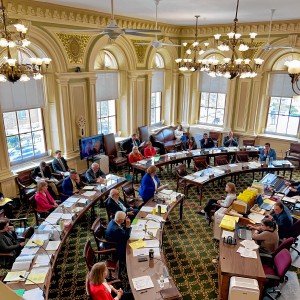 At House hearing, some argue proposed transgender sports ban would violate anti-discrimination law
 Committee approves bill allowing host communities to join charitable gaming
 Charities will not have to pay rent to casinos under new law
 Upper Valley residents among advocates for NH aid-in-dying bill
 Police: Man facing felony animal cruelty charge after striking, killing cat

Concord fights stubborn brush fire along bank of Merrimack River
The Concord Fire Department spent Wednesday morning fighting a stubborn brush fire burning on a steep bank between the Merrimack River and the rail line just south of Sewalls Falls Road.“We think it had been smoldering for a couple of days,” said...
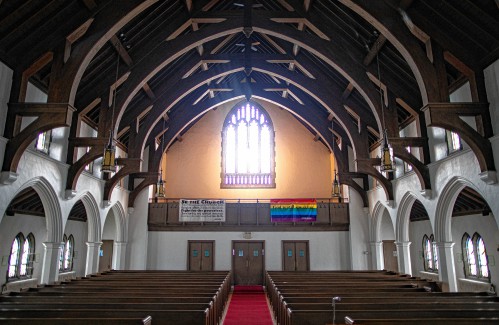
Construction of housing project in former Church to begin with parking dispute in the rearview
Construction can now begin on a project to transform the former First Congregational Church on North Main Street into housing after new plans, updated to reflect an agreement between developers and the neighboring Greater Islamic Society of Concord,...
Most Read
 N.H. Educators voice overwhelming concerns over State Board of Education’s proposals on minimum standards for public schools
 “It’s beautiful” – Eight people experiencing homelessness to move into Pleasant Street apartments
 Voice of the Pride: Merrimack Valley sophomore Nick Gelinas never misses a game
 Matt Fisk will serve as next principal of Bow High School
 Former Concord firefighter sues city, claiming years of homophobic sexual harassment, retaliation
 A trans teacher asked students about pronouns. Then the education commissioner found out.
Editors Picks
 What’s in a name? Ask an Epsom Yeaton.
 Downtown cobbler breathes life into tired shoes, the environmentally friendly way
 People of color incarcerated at higher rates in New Hampshire, but data is limited
Former Concord firefighter sues city, claiming years of homophobic sexual harassment, retaliation
People of color incarcerated at higher rates in New Hampshire, but data is limited
Former Concord firefighter sues city, claiming years of homophobic sexual harassment, retaliation

Sports

High schools: Bow’s Kelly lifts Falcon softball to victory in walk-off, more Monday results, plus Saturday’s track meets
SoftballBow 5, Campbell 4Key players: Bow – Maddy Oppold (2-for-4), Ella Roos (3-for-4), Taylor Ouellette (2-for-4, 2 RBI), Emma Kelly (1-for-4, walk-off single), Lilly Wright (1-for-3, 2-run HR), Caly Poitras (4 IP, 7 H, 1 BB), Taylor Ouellette (3...
 Patriots’ draft approach likely to be different in post-Belichick era
 High schools: Weekend results
 Gallery: Forty-mile gravel bicycle race draws racers from all over the region
 Wednesday’s high schools: Fancher’s 2-run blast leads Concord baseball to victory; plus more baseball, softball, lax and tennis results
Opinion

Opinion: This stinks, but if you don’t speak up it’s going to reek
Celeste Clark is the executive director of Raymond Coalition For Youth. Think it’s not your issue so you don’t need to pay attention? Do you think, well I don’t use it so I really don’t care? Or, are you just plain sick of hearing about marijuana...
 Opinion: The problem with Ukraine
 Opinion: This Earth Day, help keep local land clean and healthy
 Opinion: Student power: Confronting collaborators and cowards at home and abroad
 Opinion: Adopting the right 306 Rules

Politics

Sununu says he’ll support Trump even if he’s convicted
As jury selection begins this week in the hush-money trial of former President Donald Trump, New Hampshire Gov. Chris Sununu says he doesn’t believe many voters view Trump’s criminal indictments, his actions on Jan. 6, 2021, or his election denialism...
 NH mayors want more help from state on homelessness prevention funds
 Two democrats with parallel views run for same State Senate seat
 House passes bill removing exceptions to state voter ID law
 League of Women Voters suing over AI robocalls sent in NH
e-Edition
Arts & Life

Community Players of Concord present newest adaptation of Pride and Prejudice
“Not Your Grandmother’s Jane Austen…”Bold, surprising, boisterous, and timely, this Pride and Prejudice for a new era explores the absurdities and thrills of finding your perfect (or imperfect) match in life.The outspoken Lizzy Bennet is determined to...
 Concord Monitor editor Mike Pride’s final book explores the lives, works of Northern New England poets
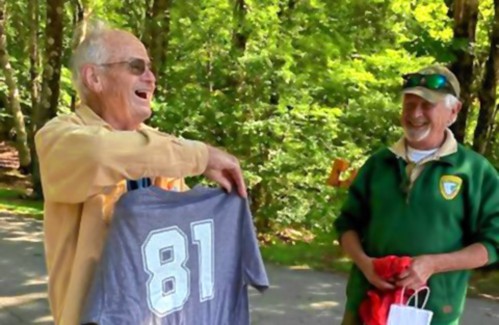 Active Aging: John Burke of Peterborough celebrated his 81st birthday with 81 hikes up Pack Monadnock
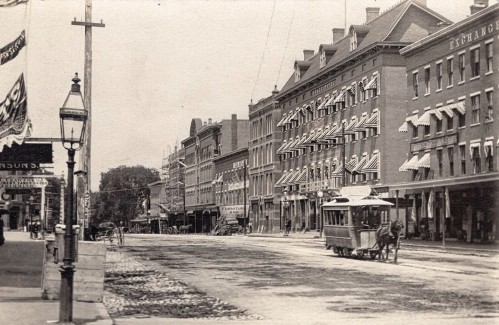 Vintage Views: From darkness to light
 From the farm: Spring brings calves, beautiful calves
Obituaries
 Dennis Michael Schwab
Manchester, NH - It is with great sorrow that we announce the passing of Dennis Michael Schwab. He passed away on April 6th, 2024, after a period of failing health. He was 51 years old. With great dignity, Michael was very thankful to b... remainder of obit for Dennis Michael Schwab
 Jay T. Sweeney
Lyman, ME - Jay T. Sweeney, 64, of Lyman Maine, Passed away unexpectedly on Tuesday, February 20, 2024. He was born in Concord, NH on October 13, 1959, son of John and Donna Cozzi, Sweeney. He graduated from Concord High school, Class ... remainder of obit for Jay T. Sweeney
 Patrick J. Pat" Lane
Patrick J. "Packin' Pat" Lane Concord , NH - Patrick Joseph Lane of Concord NH passed away suddenly in his home on April 8th. He was born in Seattle Washington October 8,1959. The son of Leo T. Lane and Blanche (Renshaw) Lane, the third... remainder of obit for Patrick J. Pat" Lane
 Lisa Marie Cheney
Lisa Marie (Jameson) Cheney Boscawen, NH - Lisa Marie (Jameson) Cheney, 56 of Boscawen NH, passed away peacefully April 17, 2024 at Granite VNA Hospice House with family by her side. Born in Concord, NH on April 20, 1967, Lisa was the da... remainder of obit for Lisa Marie Cheney

