

Latest News
 Teevens remembered at service
 Solving New Hampshire’s food waste problem one step at a time
 N.H. is finally getting a Tesla service station
 Iranian President Ebrahim Raisi, supreme leader’s protege, dies at 63 in helicopter crash
 NH missed a court deadline to end ER boarding. But it's making some progress.
 Iditarod champ had Concord roots
 Monitor bids farewell to Ray Duckler
 Area nursing homes warn new federal staffing standards could reduce capacity
 Child care providers: We like the $25K grant, love the free business coaching

Granite Geek: A museum about N.H. telephones is a whole lot more
There’s something a little surprising about one of New Hampshire’s best museums, the small but mighty New Hampshire Telephone Museum in Warner: You’re not supposed to touch most of the exhibits even though they’re the kind of thing we’ve touched all...

Boys and Girls Club denies culpability in sexual abuse lawsuit
The Boys and Girls Club of Central New Hampshire and its executive director say they are not responsible for years of sexual abuse a Concord teenager endured by a former staffer.Teegan Paul, 22, sued the organization in February, accusing it of...
Most Read
 Concord solidifies plan to respond to homelessness
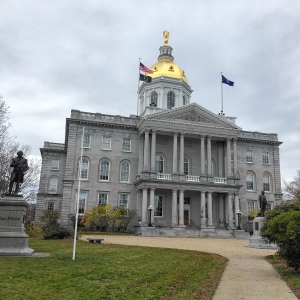 Lawyers and lawmakers assert the Department of Education is on the verge of violating the law
 A May tradition, the Kiwanis Fair comes to Concord this weekend
 Despite using federally funded math coaches, Concord test results are mixed
 Concord planning board approves new casino zoning
 On the trail: Biden back to N.H. next week
Editors Picks
 Cottage community rebuilds beloved dock after it was destroyed in boat crash
 New book by Mike Pride captures NH literary era
Concord solidifies plan to respond to homelessness
New book by Mike Pride captures NH literary era
Concord solidifies plan to respond to homelessness
 Driven by capital projects, city budget proposal would boost spending by $40 million

Sports

High schools: Baseball, softball, lacrosse and tennis results from this weekend
BaseballConcord 7, Spaulding 6Key players: Concord – Mitch Coffey (win, 2.2 IP, 1 H, 1 R, 4 K; 3 hits, 2 runs, 2 RBI), Kaelen Williams (save, 1 IP, 2 K), Noah Chrabolowski (2 hits, run, 3 RBI), Dawson Fancher (2 hits), Alex Turant (hit, run, RBI),...
 Concord softball’s senior class reflects on a dominant four-year run
 Softball: An eight-inning no-hitter for Maddy Wachter and a walk-off RBI from Sarah Taylor highlight Tide’s Senior Night
 In the face of tragedy, Franklin softball seeks togetherness
 High schools: Thursday’s results
Opinion

Opinion: Women becoming second-class citizens
Elizabeth (Zib) Corell lives in Concord. I and most of my siblings were born in the 1950s. As a product of the Depression, my mother raised her four daughters to get a good education so we could have jobs and income from them to have our own money...
 Opinion: Never again to anyone
 Opinion: What it means to be an American
 Opinion: Looking forward to resting in motion
 Opinion: Technology and the human brain

Your Daily Puzzles

An approachable redesign to a classic. Explore our "hints."

A quick daily flip. Finally, someone cracked the code on digital jigsaw puzzles.

Chess but with chaos: Every day is a unique, wacky board.

Word search but as a strategy game. Clearing the board feels really good.

Align the letters in just the right way to spell a word. And then more words.
Politics

On the trail: Biden back to N.H. next week
President Joe Biden returns to New Hampshire next week for his second visit in two months to the only general election battleground state in New England.The president will hold an official White House event in Merrimack.Afterward, Democratic sources...
 Transgender sports ban heads to Sununu
 Landfill legislation buried in Senate citing concerns from DES
 State senate approves constitutional amendment banning involuntary servitude – except for prisoners
e-Edition
Arts & Life

From the farm: More cow psychology
Cattle, unlike dogs, horses, and donkeys, have their own unique language. They are not people, and as much as we might wish otherwise, they communicate in their distinct ways. To truly connect with them, you need to learn their intriguing lingo.Have...
 Vintage Views: Our old neighborhood schools
 A May tradition, the Kiwanis Fair comes to Concord this weekend
 Author Erik Larson to host literary discussion at Chubb Theatre
 Vintage Views: The Concord Tree Planting Day of 1924
Obituaries
 Tracey T. Sweeney
Pembroke, NH - Tracey T. Sweeney, Sr., 90, of Pembroke, NH passed Monday, May 13, 2024, at Concord Hospital. Born and raised in Brockton, Massachusetts, Tracey was the son of the late Joseph K. Sweeney and Ruby (Smith) Sweeney. He had b... remainder of obit for Tracey T. Sweeney
 Crystal J. Cascadden
Meredith, NH - Crystal J Cascadden of Meredith NH passed away Monday, May 13th 2024 after being unable to recover from mitral valve heart surgery. Crystal was born December 24th, 1961 in Wiesbaden, Germany to Elmer Eugene (Gene) and Jea... remainder of obit for Crystal J. Cascadden
 Doris Jesseman
Hopkinton, NH - Doris Shover Jesseman, 93, formally a resident of Piermont NH and Hopkinton NH, passed away on May 13, 2024 at the Merrimack County Nursing Home in Boscawen NH surrounded by her family. She was born on November 6, 1930 t... remainder of obit for Doris Jesseman
 Mary Bradbury
Contoocook, NH - Mary Bradbury died peacefully on March 18, 2024 at the age of 95. Mary was born on July 16, 1928 in Greenwich Connecticut, daughter of Helen Beales (Cornelius) and James A.G. Beales. A long-time resident of Contoocook, ... remainder of obit for Mary Bradbury

