

Latest News
 Opinion: Technology and the human brain
 Concord softball’s senior class reflects on a dominant four-year run
 Softball: An eight-inning no-hitter for Maddy Wachter and a walk-off RBI from Sarah Taylor highlight Tide’s Senior Night
 Concord planning board approves new casino zoning
 2023 hit farmers hard. Now, many say NH's Ag department is making things worse in 2024
 High schools: Thursday’s results
 On the trail: Biden back to N.H. next week
 Opinion: Brown v. Board of Education and the Claremont Lawsuit

Cottage community rebuilds beloved dock after it was destroyed in boat crash
The Keewaydin Cottages feel like the set of a movie.Tall pines stand sentry on Lake Winnipesaukee’s rocky shoreline, and the air’s humidity-muffled stillness is cut only by the quiet lapping of waves against the small beach and the deep, hollow...

‘A little bit of kindness can go a long way’: Belmont continues honoring legacy of Jake Deware
Belmont baseball coach Matt LeBlanc looked up at the scoreboard and saw that his Red Raiders had scored 11 runs against Winnisquam. He felt a chill move up his spine.On May 6, the program had partnered with the Jake Deware Kindness Project to carry on...
Most Read
 Youth rally against New Hampshire’s bill allowing medical aid in dying
 In the face of tragedy, Franklin softball seeks togetherness
 A May tradition, the Kiwanis Fair comes to Concord this weekend
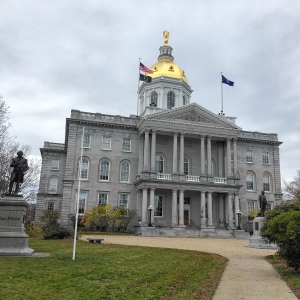 Lawyers and lawmakers assert the Department of Education is on the verge of violating the law
On the trail: Biden back to N.H. next week
Lawyers and lawmakers assert the Department of Education is on the verge of violating the law
On the trail: Biden back to N.H. next week
 Transgender sports ban heads to Sununu
Editors Picks
 For some older Jewish professors at Dartmouth and UNH, opposition to campus arrests feels personal
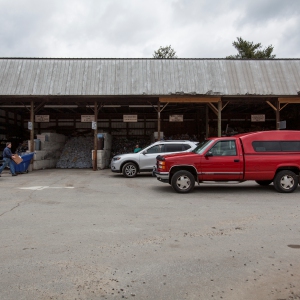 Hopkinton tries to nab out-of-town trash bandits
 New Hampshire Harm Reduction Coalition provides kits for safer drug use
 Driven by capital projects, city budget proposal would boost spending by $40 million

Sports

High schools: Wednesday’s baseball, softball, lacrosse and tennis results
BaseballBelmont 5, Gilford 0, 8 inn.Key players: Belmont – Anakin Underhill (8 IP, 1 H, 4 BB, 15 K), Michael Collette (2-for-4, RBI, run), Hutch Haskins (1-for-5, 2 RBI), Owen Waldron (1-for-3, walk, run), Wyatt Divers (1-for-3, RBI, run)Highlights:...
 Gallery: Concord girls’ lacrosse celebrates Senior Night with win over Nashua North
 High schools: Monday’s baseball, softball, lax, tennis and track results
 Baseball: Undermanned, Belmont battles against one of the state’s top pitchers
 Baseball: Three takeaways from Concord’s tight game against Goffstown
Opinion

Opinion: Show support for transgender girls
John Buttrick writes from his Vermont Folk Rocker in his Concord home, Minds Crossing. He can be reached at johndbuttrick@gmail.comIt is no surprise that some people are uncomfortable when issues of sex and gender are acknowledged to be a part of the...
 Opinion: Our responsibility to care for the most vulnerable among us
 Opinion: New Hampshire’s LGBTQ+ Youth need support, not political attack
 Opinion: Seeing the full picture: Optometry can increase access to care
 Opinion: Which cannabis law, New Hampshire?

Your Daily Puzzles

An approachable redesign to a classic. Explore our "hints."

A quick daily flip. Finally, someone cracked the code on digital jigsaw puzzles.

Chess but with chaos: Every day is a unique, wacky board.

Word search but as a strategy game. Clearing the board feels really good.

Align the letters in just the right way to spell a word. And then more words.
Politics

Transgender sports ban heads to Sununu
The New Hampshire Senate passed a bill Thursday that would ban transgender girls from participating on public school-sponsored sports teams starting in fifth grade.The bill, HB 1205, was passed by the House in March and now heads to Gov. Chris...
 Landfill legislation buried in Senate citing concerns from DES
 State senate approves constitutional amendment banning involuntary servitude – except for prisoners
 Lawmaker apologizes for comments directed at Walpole Rep. Weber
e-Edition
Arts & Life

Vintage Views: Our old neighborhood schools
Our little town of Rumford was growing. People were arriving, and the frontier was becoming a town. Governor Benning Wentworth determined that the name would be changed to Concord to mixed emotions within the community, and the Revolution arrived,...
 A May tradition, the Kiwanis Fair comes to Concord this weekend
 Author Erik Larson to host literary discussion at Chubb Theatre
 Vintage Views: The Concord Tree Planting Day of 1924
 From the archives: A Dark Day for New England
Obituaries
 Mary Bradbury
Contoocook, NH - Mary Bradbury died peacefully on March 18, 2024 at the age of 95. Mary was born on July 16, 1928 in Greenwich Connecticut, daughter of Helen Beales (Cornelius) and James A.G. Beales. A long-time resident of Contoocook, ... remainder of obit for Mary Bradbury
 Pamela R. Szacik
Tilton, NH - Pamela Szacik, 68, of Tilton, NH has passed away on May 6, 2024. She was born in Concord, NH to John E. Ward and Frances L. Ward. After graduating with a Bachelor's degree, she went on to have a lengthy career with the ... remainder of obit for Pamela R. Szacik
 Donald M. Bennert
Bow, NH - Don passed away peacefully in his home on November 17, 2023, after complications of Leukemia. He was born on September 6, 1947 in Manchester, NH, the son of Harry W. Bennert, MD and Elizabeth McIntire Bennert. He spent his ea... remainder of obit for Donald M. Bennert
 Richard and Connie Strome
Concord, NH - Richard Strome, 92, of Contoocook, New Hampshire died on July 7, 2023 and his loving wife Connie Strome, 90, also of Contoocook, died on May 6, 2024, both at The Birches in Concord, and both after long battles with Alzheim... remainder of obit for Richard and Connie Strome

