

 Former prison guard Matthew Millar of Boscawen stands trial in death of patient at Secure Psychiatric Unit
 Attorney General: New Hampshire could receive up to $30 million for opioid treatment and prevention from Purdue settlement
 Concord Hospital Health System welcomes New England College nursing cohort
 Heavy rain has delayed planting schedules. But NH farmers still anticipate a successful season
 City to contemplate impact fee hike
 Not ‘a political person’: Education leaders offer rare bipartisan support for commissioner nominee Caitlin Davis
 Granite Geek: Every message you get is a scam; yes, every single one
 Athlete of the Week: Nate Kiah, Bow Falcons

‘Part of history’: At 101, WWII veteran Floyd Severance remains a staple of his community
Except for his baseball hat displaying the words “It took me 101 years to look this good,” Floyd Severance hides his age well.

Webster seized and sold his house for back taxes. Now the town has agreed to pay him $38,000
When Michael Durgin got the call on Tuesday morning, he thought it was bad news.
Most Read
Editors Picks
 A Webster property was sold for unpaid taxes in 2021. Now, the former owner wants his money back
 Inside EFAs: How school vouchers have fueled a Christian school enrollment boom in New Hampshire
 City prepares to clear, clean longstanding encampments in Healy Park
 Productive or poisonous? Yearslong clubhouse fight ends with council approval

Sports

Track & field: Hopkinton’s Lane wins New England title in 3,200 meters, Concord’s Saysaw runs state record times in 100 and 200
Already a division champion, state champion and team champion, Hopkinton sophomore Maddy Lane added some more hardware to her collection by winning the 3,200 meters crown at New Englands on Saturday.
 Boys’ Lacrosse: Bears narrowly lose to Plymouth in D-III championship, 7-5
 Boys’ volleyball: Coe-Brown wins program’s first championship, completes perfect season
 Baseball: John Stark falls in D-II championship to top-ranked Souhegan
 Baseball: Bishop Brady falls to Monadnock, 2-1, in D-III final
Opinion

Opinion: Outlines of a new dystopia
 Opinion: Speechless in America no more
 Opinion: Friends don’t let friends drive drunk
 Opinion: Concord should be run like a household, not a business
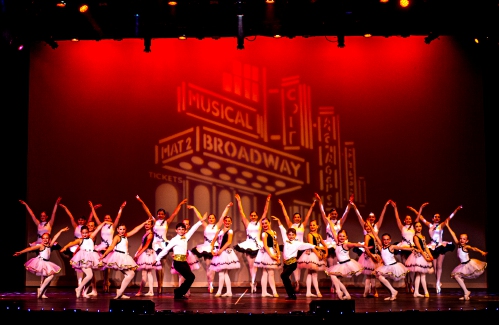 Opinion: Our leaders’ puzzling decision to eliminate the State Council on the Arts
Your Daily Puzzles

An approachable redesign to a classic. Explore our "hints."

A quick daily flip. Finally, someone cracked the code on digital jigsaw puzzles.

Chess but with chaos: Every day is a unique, wacky board.

Word search but as a strategy game. Clearing the board feels really good.

Align the letters in just the right way to spell a word. And then more words.
Politics
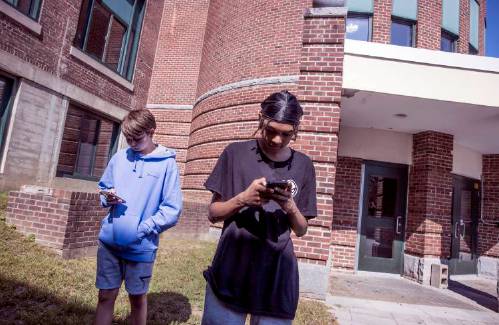
New Hampshire school phone ban could be among strictest in the country
When Gov. Kelly Ayotte called on the state legislature to pass a school phone ban in January, the pivotal question wasn’t whether the widely popular policy would pass but how far it would go.
 Concord became a Housing Champion. Now, state lawmakers could eliminate the funding.
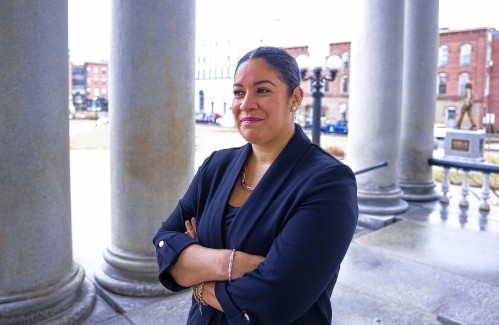 ‘A wild accusation’: House votes to nix Child Advocate after Rep. suggests legislative interference
 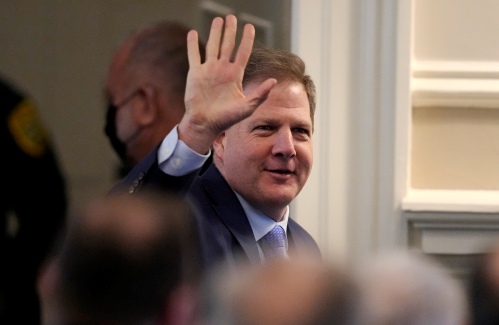 Sununu decides he won’t run for Senate despite praise from Trump
 Town elections offer preview of citizenship voting rules being considered nationwide
e-Edition
Arts & Life

High Range coming to Henniker Concert Series
High Range, a high-energy roots/folk/bluegrass group with a long list of superlative reviews from national publications as well as raves from local attendees, returns to Henniker to perform at the Angela Robinson Bandstand in Henniker, Tuesday evening, June 17, beginning at 6:00 p.m.
 Young Professional of the Month Cady Hickman: Harmonizing Marketing, Marathons and Meaningful Moments
 Artist spotlight: Jackie Hanson
 White Mountain art exhibition makes new home at New Hampshire Historical Society
  A sneak peak of summer events in the Concord area
Obituaries
 Russell C. Rivard
Hill, NH - With profound sadness we announce the passing away of Russell C. Rivard , 71 on May 7, 2025 with his wife Derelyn by his side. He was a resident of Hill, NH for over 30 years and Quincy, MA. Russell was born, raised, and... remainder of obit for Russell C. Rivard
 Larry C. Owsowitz
Concord, NH - Larry C. Owsowitz died at hospice house in Concord on Tuesday, June 10 after a long battle with glioblastoma. Larry was born in Moses Lake, Washington on February 14, 1957. As an Air Force brat, Larry grew up moving from b... remainder of obit for Larry C. Owsowitz
 Malcolm A.R. Stewart Jr.
Malcolm A.R. Stewart, Jr. Concord, NH - Malcolm A.R. Stewart, Jr., 86, of Concord, NH died on Tuesday, June 10, 2025, at Concord Hospital, in Concord, NH. Malcolm was born on July 15, 1938, in Laconia, NH, the son of the late Malcolm A.... remainder of obit for Malcolm A.R. Stewart Jr.
 Robert J. Cassavaugh
Robert J. "Bob" Cassavaugh Penacook, NH - Robert J. "Bob" Cassavaugh, 96, of Penacook, passed away on June 6, 2025, at the Merrimack County Nursing Home, surrounded by family. He was born in Concord, NH on April 6, 1929, as the only chil... remainder of obit for Robert J. Cassavaugh

