

Latest News
 Lavender haze: Purple fields bloom at Warner farm
 Get $30 toward a new air conditioner at Concord turn-in event
 Hotel makeover underway in downtown Concord
 Beaver Meadow’s Hakala ties at top of leaderboard, other locals make the cut at 122nd state am
 Arts in the Park returns for July

Athlete of the Week: Grace Saysaw, Concord High School
Concord High junior Grace Saysaw cemented herself as one of the Crimson Tide’s best sprinters of the past few years with a record-breaking end to the spring.

What might Trump’s ‘one big beautiful bill’ mean for Concord?
Under the “one big beautiful bill,” passed by Congress and signed into law by President Trump, the typical Concord resident is expected to pay roughly $1,000 less in federal taxes next year, according to an analysis from the Institute on Taxation and Economic Policy. The impact of the plan’s cuts to federal assistance, along with a ballooning federal debt and the rising cost of tariffs, however, is expected to far outweigh those savings.
Most Read
 New Hampshire legalizes public alcohol consumption in designated ‘social districts’
 New Hampshire providers brace for Medicaid changes that reach beyond healthcare
 Warner town administrator granted restraining order against selectman
 Concord school leaders weigh the future of middle school project without state building aid
 Opinion: Dear Gov. Ayotte, let’s talk about the books
 Fire in Webster fully engulfed one garage, spread to another
Editors Picks
 A Webster property was sold for unpaid taxes in 2021. Now, the former owner wants his money back
 Report to Readers: Your support helps us produce impactful reporting
 City prepares to clear, clean longstanding encampments in Healy Park
 Productive or poisonous? Yearslong clubhouse fight ends with council approval

Sports

Local golfers tee off at 122nd Amateur Championship
When the 122nd New Hampshire Amateur Championship tees off on Monday at Rochester Country Club, more than two dozen golfers with ties to the Capital Area will be in the field.
 As Concord’s Gavin Richardson places second at golf Junior Amateur, young players look ahead to the 122nd State Amateur Championship
 Sunapee’s Bryce Whitlow keeps memory of above-average MLB players alive through social media page ‘MLB Hall of (Pretty) Good’
 Six local seniors play in CHaD East-West All-Star Football game; Nyhan wins MVP
 Concord Monitor Spring Players of the Season
Opinion

Opinion: Trumpism in a dying democracy
 Opinion: What Coolidge’s century-old decision can teach us today
 Opinion: The art of diplomacy
 Opinion: After Roe: Three years of resistance, care and community
 Opinion: Iran and Gaza: A U.S. foreign policy of barbarism

Your Daily Puzzles

An approachable redesign to a classic. Explore our "hints."

A quick daily flip. Finally, someone cracked the code on digital jigsaw puzzles.

Chess but with chaos: Every day is a unique, wacky board.

Word search but as a strategy game. Clearing the board feels really good.

Align the letters in just the right way to spell a word. And then more words.
Politics
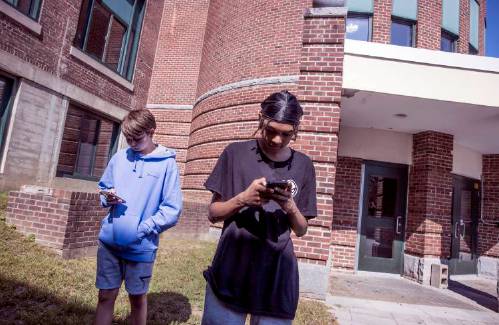
New Hampshire school phone ban could be among strictest in the country
When Gov. Kelly Ayotte called on the state legislature to pass a school phone ban in January, the pivotal question wasn’t whether the widely popular policy would pass but how far it would go.
 Concord became a Housing Champion. Now, state lawmakers could eliminate the funding.
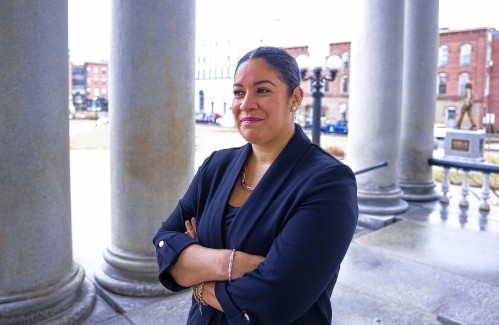 ‘A wild accusation’: House votes to nix Child Advocate after Rep. suggests legislative interference
 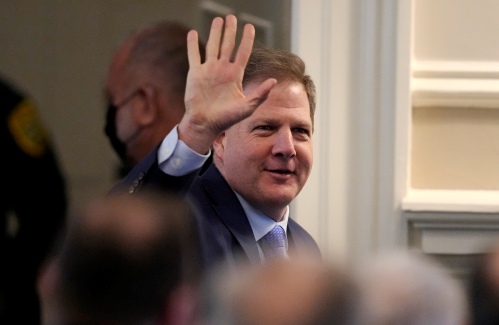 Sununu decides he won’t run for Senate despite praise from Trump
 Town elections offer preview of citizenship voting rules being considered nationwide
e-Edition
Arts & Life

Hopkinton art gallery showcases “Creativity Beyond Convention”
The next exhibition at Two Villages Art Society in Hopkinton is a solo show of the work of Sandy Steen Bartholomew, an artist who celebrates the imaginative, neurodivergent mind through whimsical creatures, playful stories, and unconventional materials.
 AROUND CONCORD: Your guide to free summer music
 Around Concord: Steps to nowhere – but it used to be somewhere
 Around Concord: Refreshing recipes from Table Bakery
 The Rebel Collective to perform in Henniker
Obituaries
 Heather Kraus
Concord , NH - Heather, M. Kraus, age 55, of Thorndike Street passed away after a courageous battle with cancer at Concord Hospital on July 7, 2025 surrounded by her loved ones. She was born in Attleboro, MA the daughter of the late Ar... remainder of obit for Heather Kraus
 Carol Harris
Ocklawaha, FL - Carol Ann Harris (Bouthiette, Kiley) age 79 of Ocklawaha, FL passed peacefully into heaven June 22, 2025, surrounded by her loving family, both in person and spirit while in the care of Hospice after 9 courageous years s... remainder of obit for Carol Harris
 Casper Kranenburg
Concord, NH - The world is a sadder place since Casper Kranenburg left it on July 2, 2025. Casper was born August 12, 1948 in The Hague, the Netherlands. When he was 20, he moved to New York City to work in travel and hospitality. This ... remainder of obit for Casper Kranenburg
 Elizabeth Johnson
Elizabeth (McKerley) Johnson Wilmot, NH - Elizabeth "Betty" passed away peacefully at home on July 6, 2025 surrounded by her loving family and her favorite pets, Iris and Brindy. Betty was born on June 3, 1935, in Concord, NH. She is th... remainder of obit for Elizabeth Johnson

