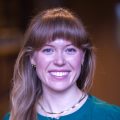
Nevien Elhefnawy started work at 5 a.m., finished her shift mid-afternoon, drove an hour to UNH in Durham to pick up her daughter, Nour Elhawawi, then headed back to Concord for the weekly Multicultural Festival planning meeting.
Joining the volunteer organizing committee takes time, but both women look forward to sitting down each Thursday at picnic tables in Keach Park.
“This festival make everyone at Concord like a big family,” Elhefnawy said. “It’s good for all the culture. Everyone in Concord, all of New Hampshire. That is a good thing for cooperation together, for all these people.”
She and her family moved to Concord from Cairo, Egypt, ten years ago. In the decade since, New Hampshire’s capital city continued to welcome them to their new home. The festival played a large role in that.
“We’re not from a small town like Concord,” said Elhawawi, now a junior in college. “We didn’t get to be that connected to a community. We’re city people, so we didn’t really get the chance to do that. So it feels so great to have a community like this in our life.”
On Sunday, that community will gather at Keach Park for a celebration of the many cultures — over 70 in total – represented among the city’s 45,000 residents. The festival includes a flag parade, music and dance performances from people of all ages, several dozen food vendors featuring cuisine from around the globe, and different craft vendors.
This year marks its twentieth anniversary.

‘Celebrate the community’
For the past 30 years, increasing numbers of refugees resettled in Concord.
In 2004, The Task Force Against Racism and Intolerance – a group of faith, government and community groups assembled as a response to a 1984 arson at St. Paul’s Church downtown. They hosted a series of community conversations about coming together.
Tension surrounded the community’s new growth, said Helen McGlashan, a member of the task force.
“We needed to do something to get the community talking about racism,” she said.
Over a series of meetings with hundreds of participants, the idea for the festival kept coming up.
“People kept saying ‘We need something to bring people together to celebrate the community,” McGlashan said. “That was the seed.”
Nancy Jo Chabot, a task force member, loved the idea and led the charge to found it the following year.
“We like to celebrate stuff,” Chabot said. “Whatever the thing is, let’s make it into a party, a festival, a parade.”
From all vantages, the festival has always been an invitation: for its participants, an invitation to share; for its attendees of all backgrounds, an invitation to forge new relationships.
“The main goal,” said McGlashan, who helped plan the festival for a decade, “is to celebrate who we are.”
It was a doorway, explained Cary Gladstone, who was initially involved in community outreach, like an outstretched hand between people who may not have otherwise known how to make an introduction.
“There are so many folks who feel siloed or not really sure how to approach people of a different culture,” Gladstone said. “It was just a good example of how to get to know people’s lives, starting with meeting someone at the festival.”

From a few tables and tents on the Statehouse lawn, the festival grew every year, adding more artists, chefs and performers – and attendees.
In 2013, Jessica Livingston heard the festival might not happen that year. She almost shrugged it off.
When word got around, Livingston heard from more and more people who couldn’t bear to see it go away.
“Everybody was like, ‘No, it has to happen. Like, it’s so important to the community,’” Livingston recalled. So many people wanted to help bring it back, but someone had to step in to organize it all. She decided to make it happen.
“It was really cool to see that this was something that was so important,” she said.
In the following years, even as the number of refugees arriving in Concord started to taper, the festival’s profile grew and grew.
In 2018, something clicked. Thousands of people came to Concord to see the parade of flags, cheer on the dancers and relish the food.
The year 2020 meant a forced year off, as with so many other community gatherings, due to the pandemic. It also brought reflection.
The U.S. Census identified the Heights neighborhood as one of the most racially diverse in the state. Livingston increasingly heard that immigrants and refugees living on the east side of the river were unable to attend the festival because they didn’t have a car, and the local bus doesn’t run on the weekend.
It was a lightbulb moment, Livingston said: Why not do it at Keach Park right in the Heights?
Being downtown had given the festival exposure, but moving it to the park brought it into the heart of the neighborhood where many of its vendors and participants lived.
“It was like a welcome home,” Livingston said. Now, she wonders why it wasn’t held there all along.


‘This is good for everyone’
Elhefnawy and Elhawawi had known about the festival for years but attended last year for the first time at the encouragement of a friend, who was selling Palestinian food among the many tables of international cuisine.
“The atmosphere at this festival, you talk with others as your friends,” Elhefnawy said. They knew they wanted to get involved.
Yet Livingston wasn’t sure the festival was a good idea this year.
With deportations happening across the country and a broad cooling on diversity initiatives, she worried that the festival’s legacy as a place of safety and welcoming was at risk.
She was encouraged to keep it going.
“I heard overwhelmingly from the actual immigrant community that they want to have it,” she said. “They want to do it. They still want to share their culture. They want us all to show up in force and show we are here.”
Elhawawi couldn’t agree more.
“It definitely feels challenging but I feel like it’s worth the challenge,” Elhawawi said. “It’s worth it. We shouldn’t be afraid in our houses and just living your life in fear. That shouldn’t happen. You should still live your life. It’s still worth it.”
Her mother views the festival as an opportunity to build mutual understanding among people of different backgrounds.
“It’s really so important for all New Hampshire,” Elhefnawy said. “It really makes all the people as one big family. That is good for everyone.”
The mother-daughter pair are eager to help build a long future for the festival, bringing new traditions with them, from transforming the planning meetings into potluck dinners to adding pick-up soccer games to the festival schedule.
“One thing I’m really excited to see on Sunday, honestly, is just how the things that we talked about come to light and becoming as beautiful as what we had in mind. It’s just so nice to see your planning and your ideas actually happen,” said Elhawawi, who will be selling homemade goods from Moonlight Crafts, the small business she and her mother started last year.
The two women plan to spend much of Saturday preparing food that Elhefnawy will sell from her booth at the festival. She intends to make koshari, a traditional Egyptian specialty featuring rice, pasta, lentils, fried onions, garlic and zesty tomato sauce, and sheesh tawook, a marinated chicken dish.
“When you celebrate anything, you have to bring food, “Elhefnawy said. “Food meaning love, because when you cook anything, you don’t cook for anyone. You cook by love, made anything by love.”
She wants to share such an important part of her identity with those around her, not just at the festival but every other day of the year, too.
“I really hope after Sunday, people are going to make a whole lot of new connections,” said Elhefnawy, with her daughter translating a few words. “Hopefully, right after, these connections will grow into something so much bigger.”
More information:
Concord’s Multicultural Festival will take place from 11 a.m. to 5 p.m. on Sunday, September 21 at Keach Park. For further details, visit https://concordnhmulticulturalfestival.org.